Walk into a well-run Montessori room and you will witness something that seems almost impossible. A three-year-old is buttoning and unbuttoning a frame, again and again, completely absorbed — for forty minutes — without a single adult hovering, bribing or saying "concentrate, beta." No screen. No reward. Just a small child, deeply focused, by choice.
How? In an age of shrinking attention spans, how does a hundred-year-old method produce children who can concentrate this deeply? The answer is not luck or strict discipline. It is science — three specific ideas that Dr Maria Montessori discovered through years of careful observation.
Sensitive periods: nature's open windows
Dr Montessori noticed that children pass through what she called sensitive periods — limited windows when a child is irresistibly, joyfully drawn to learning one specific thing. During a sensitive period for order, a toddler insists every slipper goes in its exact place. During the sensitive period for small objects, they obsess over picking up the tiniest crumb on the floor.
These are not quirks to be corrected. They are nature flinging open a window. When a child learns during their sensitive period, it happens effortlessly and joyfully — the way children absorb their mother tongue without a single grammar lesson.
Trying to teach a child against their developmental window is like swimming against a river. Working with it is like floating downstream.
This is why early childhood matters so much. As our training notes put it, development in early childhood is very rapid, and it is systematic — a child first learns to hold the neck, then sit, then crawl, then walk, each in its own time. Montessori simply teaches us to read these windows and offer the right activity at the right moment. The result looks like magic; it is actually perfect timing.
The prepared environment: the room as a silent teacher
The second secret is what Montessori called the prepared environment. Look closely at a Montessori classroom and you will see everything is built for the child, not the adult:
- Shelves are low, so children can reach and return materials themselves.
- Furniture is child-sized, so they can move it without help.
- Materials are beautiful, orderly and have a clear place.
- Each activity sits on its own tray, so there is no clutter to distract.
This is no accident. Our pedagogy notes call the environment the "third teacher." When a room is calm, ordered and made for small hands, a child does not waste energy struggling or waiting for an adult. That freed-up energy flows straight into concentration.
Compare it to a typical playroom overflowing with fifty noisy toys. A child there flits from one to the next, never settling. The prepared environment removes the noise so deep focus can finally appear. The principle is simple: outer order creates inner order.
Self-correcting materials: learning without a scolding voice
Here is the third piece, and perhaps the cleverest. Montessori materials are self-correcting — they let the child discover their own mistake, without an adult saying "no, that's wrong."
Think of a set of cylinders that each fit only one hole. If a child puts a cylinder in the wrong place, one cylinder will be left over at the end with no home. The material itself tells them, quietly: try again. No red mark, no frown, no "you got it wrong."
Why does this matter for concentration? Because the child stays in control of their own learning. There is no fear of being corrected, no waiting for the teacher's approval. The work becomes a satisfying puzzle the child solves themselves — and self-directed work is the deepest, most focused kind there is. This is the heart of what our notes describe as Montessori's gift: it "builds independence, concentration and intrinsic motivation."
The teacher who steps back
In most classrooms, the teacher is the centre of attention. In Montessori, the teacher is an observer and guide. She demonstrates an activity slowly, then steps back and lets the child work — even if the child is slow, even if they repeat it twenty times.
That restraint is a skill. It takes real training to resist "helping," to trust the child, and to know exactly when to introduce the next material. But when a teacher masters it, children blossom into focused, independent little learners. The teacher's quiet observation is what allows the child's loud concentration.
Why this builds more than focus
Concentration is just the visible result. Underneath, the Montessori method is building things that last a lifetime:
- Independence — "I can do it myself."
- Intrinsic motivation — learning for the joy of it, not for a sticker.
- Self-discipline — the ability to choose work and stick with it.
- Problem-solving and critical thinking — because the child works things out for themselves.
In a world racing toward instant gratification and endless screens, these are perhaps the most precious skills we can give a child. And remarkably, mixed-age Montessori classrooms add one more layer — younger children learn from older ones, older children build confidence by guiding the young. Peer learning, built right into the design.
The method can be learned — and taught
What makes all of this work is not the wooden materials. It is a deeply trained teacher who understands sensitive periods, knows how to prepare the environment, and has the patience to step back and observe. That understanding is precisely what early-childhood teacher training gives you.
Once you see why Montessori works, it is hard to unsee. You start noticing sensitive periods in every child around you. You start craving order in the spaces children use. You begin to understand children at a whole new depth.
Ready to take the first step?
If this fascinated you — if you found yourself thinking "I want to understand children like this" — that curiosity is exactly where a wonderful teaching journey begins.
At the Toddler Teachers Training Institute in Nagpur, founded by Mrs. Avanti Jodhpurkar, our Diploma in ECCEd teaches the real science and practice behind the Montessori method, child development and child psychology. Come experience a free demo class — online anywhere in India, or in our Bajaj Nagar classroom — and feel it for yourself.
You can explore the ECCEd diploma, or send a simple "Hi" on WhatsApp to +91 70206 06285. New batches begin July 2026.
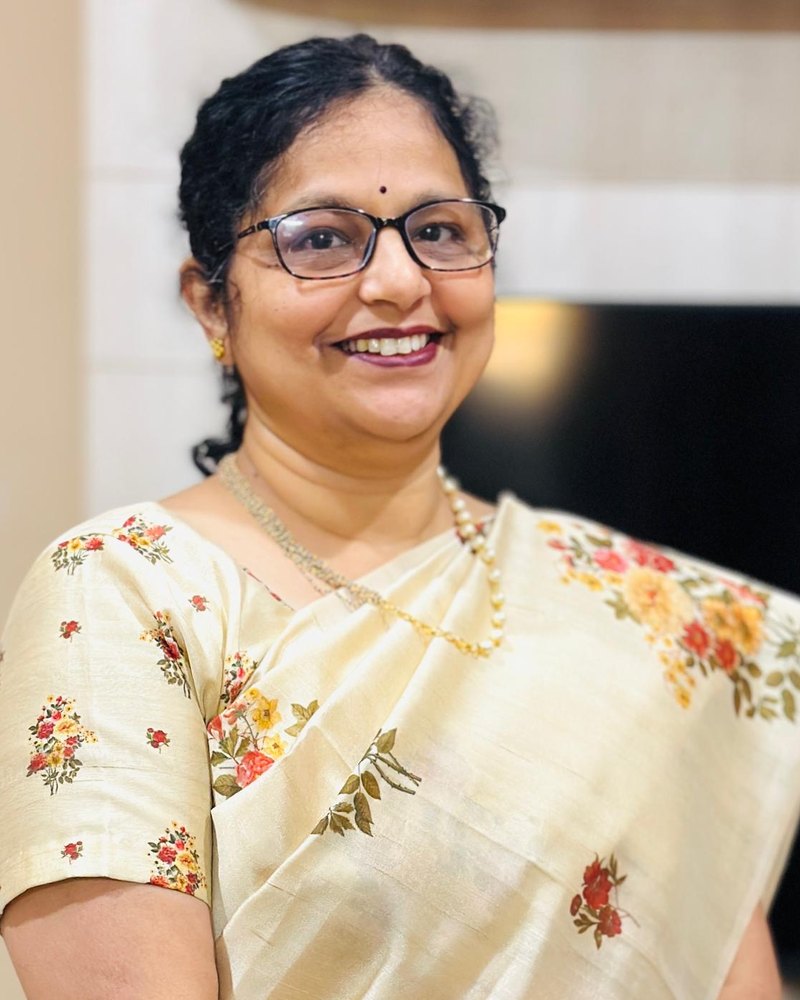
Written by
Mrs. Avanti Jodhpurkar
Founder & Director, Toddler Teachers Training Institute
Mrs. Avanti Jodhpurkar has spent over 13 years training early-childhood educators across India. She founded Toddler Teachers Training Institute in Nagpur with one belief: that any woman who loves children can become a confident, qualified teacher — whether she is starting fresh or restarting after years at home.
Curious to learn more?
Book a free demo class and see how the ECCEd diploma works — no fees, no pressure.
Book a Free Demo