Walk into any good preschool in India today and you will see it: low shelves a child can reach, small jugs they can pour from, wooden materials laid out invitingly, and a teacher who guides quietly rather than commanding. We call all of this "Montessori," often without a second thought about where it came from.
It came from one remarkable woman who, over a hundred years ago, looked at children the way almost no one else did — and decided to trust them. This is her story, and the reason her ideas still feel fresh in a world of screens and stress.
Who was Dr. Maria Montessori?
Maria Montessori was born in Italy in 1870, at a time when education and medicine were firmly men's worlds. She refused to accept that. Against the expectations of her society, she became one of Italy's first female doctors — a quiet act of courage that tells you everything about the person she was.
Her medical work brought her into contact with young children, and she began to study them not as a doctor treating problems, but as a scientist observing wonder. Like Jean Piaget after her, she came to a radical conclusion for her time: children are not little adults. They think, learn, and grow in their own way, through their own stages — and if we watch closely instead of lecturing, the children themselves will show us how to teach them.
"Discipline must come through liberty." — Dr. Maria Montessori
In 1907 she opened her first Casa dei Bambini — "Children's House" — in a poor neighbourhood of Rome. There she tried something almost unheard of: she gave children freedom within careful limits, beautiful hands-on materials, and respect. What happened astonished everyone. Children who were expected to be unruly became calm, focused, and deeply independent. The world had never seen anything quite like it.
The big ideas behind the Montessori method
Montessori's method was not a set of tricks. It rested on a few powerful beliefs about how children learn best — beliefs that modern child psychology has since confirmed again and again.
1. The prepared environment
Montessori believed the classroom itself should be a teacher. Everything is child-sized and within reach, so a small person can succeed on their own. When the environment is built for independence, half of a child's frustration simply disappears.
2. Freedom with limits
Children are given the freedom to choose their work and move about — but within clear, consistent boundaries. This is why Montessori said discipline must come through liberty: when children work independently in a calm, organised space, self-control grows from within rather than being forced from outside.
3. The teacher as a guide
In a Montessori setting, the teacher does not dominate the room. She observes, prepares, and gently guides — stepping back so the child can discover. This is the same principle Piaget urged: the teacher should guide, not control.
4. Learning by doing, with real materials
Montessori children learn through concrete, hands-on materials before moving to abstract ideas. A child touches and counts real beads long before writing a number on paper. Hands first, then the mind — exactly how young brains are wired to learn.
Why the Montessori method still works today
It would be easy to assume a method from 1907 is outdated. The opposite is true. Everything we now know about early brain development supports what Montessori observed with her own eyes.
- It matches how the brain develops. The early years are when the brain wires itself most rapidly, and it does so through movement, senses, and hands-on exploration — the very heart of the Montessori method.
- It builds confidence and independence. A child who learns to do things themselves grows up with that priceless "I can do it" feeling.
- It grows focus in a distracted age. In a world of constant screens and noise, a method that helps children concentrate deeply on meaningful work is more precious than ever.
- It respects the individual child. Montessori never compared children. Each one moves at their own pace — a truth that still calms anxious parents today.
This is why her ideas have spread into preschools across India and the world, and why they sit at the very centre of modern early-childhood education and the NEP 2020 vision of joyful, activity-based learning.
Her legacy is in your hands
Maria Montessori passed away in 1952, but step into a thoughtfully run preschool anywhere in India and her spirit is unmistakable — in the low shelves, the calm focus, and the teacher who trusts the child. Her greatest gift was not a set of materials. It was a way of seeing children: as capable, curious little people who deserve our respect.
Every trained early-childhood teacher carries that gift forward. When you learn to prepare an environment, to guide instead of command, and to truly observe a child, you become part of a story that began in a small room in Rome over a century ago.
Ready to take the first step?
If Maria Montessori's story stirred something in you — a sense that this is how children should be taught — you can learn to do exactly this.
At the Toddler Teachers Training Institute in Nagpur, founded by Mrs. Avanti Jodhpurkar, our Diploma in ECCEd teaches the real Montessori method alongside child psychology and modern teaching practice. Come and experience it in a free demo class, online or in our Nagpur classroom. You can explore the ECCEd diploma on our website, or send a "Hi" on WhatsApp to +91 70206 06285. New batches begin July 2026.
Written by
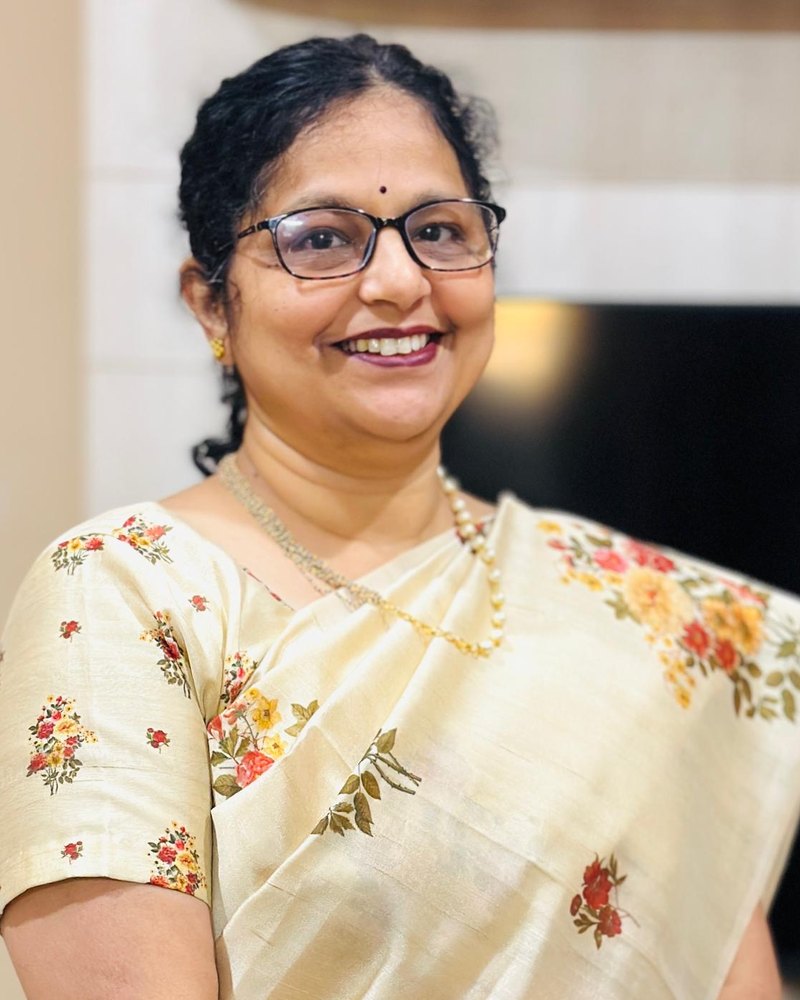
Mrs. Avanti Jodhpurkar
Founder & Director, Toddler Teachers Training Institute
Mrs. Avanti Jodhpurkar has spent over 13 years training early-childhood educators across India. She founded Toddler Teachers Training Institute in Nagpur with one belief: that any woman who loves children can become a confident, qualified teacher — whether she is starting fresh or restarting after years at home.
Curious to learn more?
Book a free demo class and see how the ECCEd diploma works — no fees, no pressure.
Book a Free Demo